Axolotl Face Paint Tutorial
Build a friendly aquatic design with a rounded pink head, feathery external gills, and simple water accents.
An axolotl reads differently from a fish, frog, or ordinary salamander because of its rounded head and three feathery external gill branches on each side. This tutorial keeps those features clear while using a comfortable forehead placement and optional accents around the outer eye area. Allow about twelve minutes as a planning estimate and simplify the water details when painting at a busy event.
Tutorial Overview
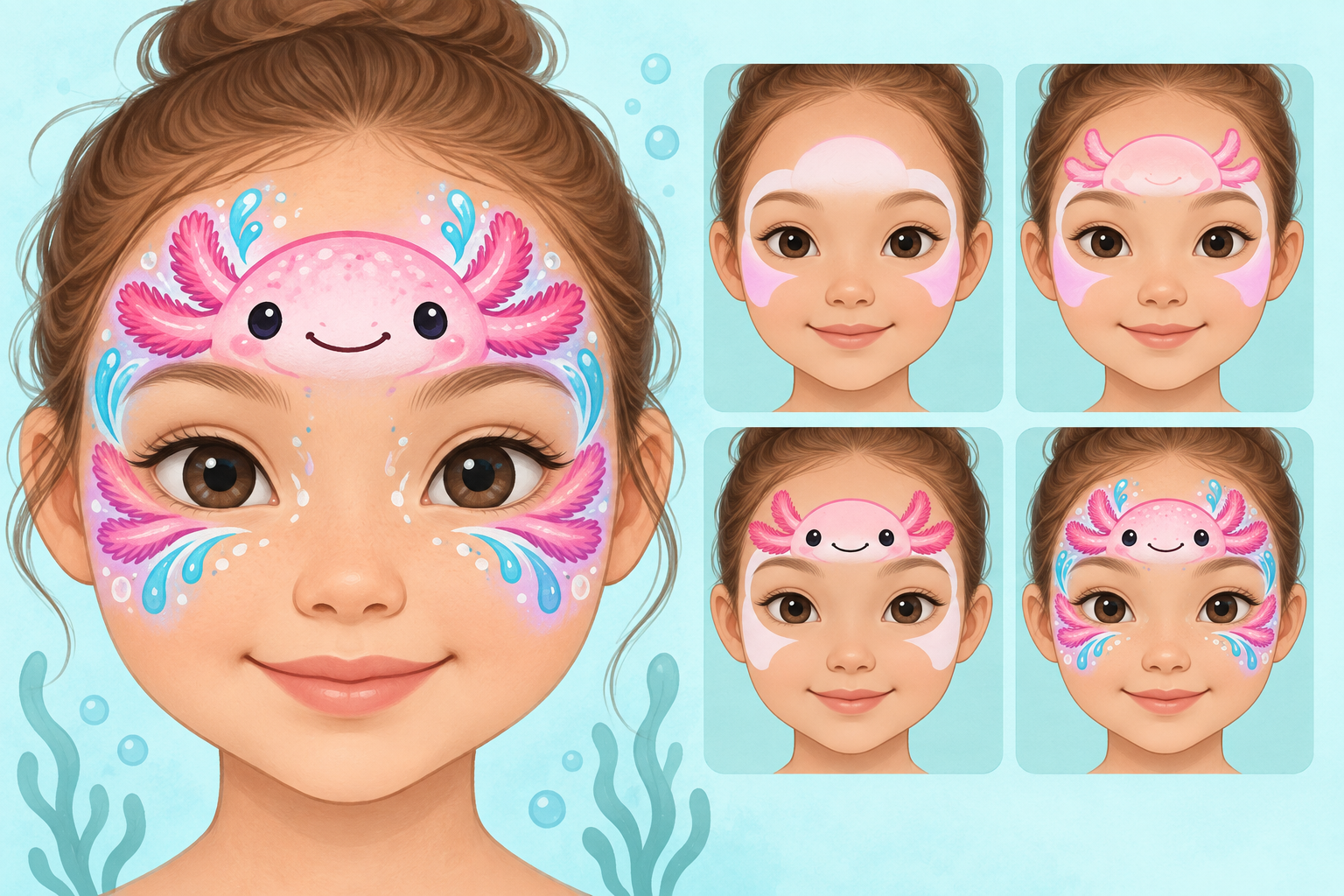
The tutorial composite is a generated editorial illustration created for this guide, not a customer or portfolio photograph.
Step-by-Step Instructions
Map the Rounded Head
Place a wide, low oval across the center of the forehead, leaving space above the eyebrows. Use pale pink and keep both sides balanced before filling the shape.
Fill and Shade the Base
Fill the oval with a thin, even pale-pink layer. Blend a little coral at the lower edge and temples while the base is still workable, keeping the middle light.
Build the External Gills
Paint three short coral branches extending from each side of the head. Add two or three tapered flicks to every branch so they look feathery rather than like solid spikes.
Add the Friendly Face
After the base settles, paint two small charcoal eyes and a short curved smile. Tiny white highlights in the eyes help the expression remain readable from a distance.
Define the Head
Use a slightly deeper pink to define selected parts of the lower edge and the bases of the gills. Avoid a heavy dark outline around the entire pale shape.
Add Aqua Water Strokes
Place two or three tapered aqua strokes outside each eye or near the temples. Keep them separate from the eyelids and point them away from the eyes.
Finish With Bubbles
Add a few aqua and white dots in varied sizes, then stop before the accents compete with the axolotl silhouette.
Common Mistakes to Avoid
✕ Painting Ordinary Spikes
Solid triangles can make the animal look like a dragon. Branch each gill with fine tapered flicks so the external gills remain the defining feature.
✕ Crowding the Eye Area
Keep the main animal above the brows and move optional water strokes outward rather than filling the eyelids.
Professional Tips
🫧 Prioritize the Silhouette
The rounded head plus three gills on each side communicates axolotl faster than extra bubbles or scales.
🖌️ Use Tapered Pressure
Press at the base of each gill flick and lift as you pull outward to create a soft feathery end.
Design Variations
- Quick Cheek Axolotl Reduce the design to a small pink head, three gills per side, eyes, and a smile on the cheek.
- Lavender Axolotl Exchange pale pink for lavender while keeping coral gills and aqua water accents.
Safety & Skin Care
- Use products labeled for cosmetic use and follow their manufacturer instructions.
- Keep paint away from the waterline and stop if the person reports discomfort or irritation.
- Use clean tools and fresh or properly cleaned applicators between guests.
Frequently Asked Questions
What makes an axolotl face paint recognizable?
Use a broad rounded head and three feathery external gill branches on each side. Those features matter more than adding many aquatic decorations.
Can this be made into a quick design?
Yes. Use a small cheek placement with the head, six gill branches, eyes, and a smile, and omit most bubbles and water strokes.
Design Information
- Small sponge or filbert brush for the pale base
- Round brush #4 for the head and gill branches
- Round brush #1 or #2 for facial details and highlights
- Clean water and clean applicators
Available for parties across the Triangle.
Related Design Guides
Dinosaur Face Paint Guide
Scales, claws, and prehistoric fun for every dino-lover.

Panda Face Paint Guide
A cute, cuddly favourite that is surprisingly easy to master.

Tropical Sunset Face Paint Guide
A golden beach sunset with palm trees, flying birds, and sparkling gems.